






What is the Difference Between Fire Doors and Fire Exit Doors?

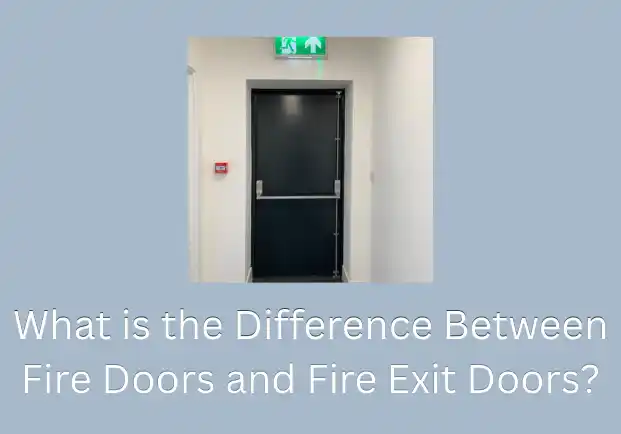
The difference between fire doors and fire exit doors lies in their purpose, design, and function during emergencies. Fire doors are built to resist fire and contain it within a specific area, while fire exit doors are designed to provide a safe and quick escape route. Understanding this difference is essential for ensuring building safety, compliance, and effective emergency evacuation planning in Saudi Arabia.
What are Fire Doors?
Fire doors are specially engineered doors designed to contain fire and smoke within a specific area for a defined period, typically ranging from 30 to 120 minutes. Their primary role is to slow down the spread of fire, allowing occupants more time to evacuate safely and giving emergency services better control over the situation.
These doors are constructed using fire-resistant materials such as steel, gypsum, or solid timber cores. They also include critical components like intumescent seals, which expand under heat to block smoke and flames from passing through gaps.
Key Features of Fire Doors:
- Fire resistance ratings (30, 60, 90, or 120 minutes)
- Ability to contain smoke and heat
- Self-closing mechanisms to ensure they remain shut
- Fire-rated frames, hinges, and seals
In Saudi Arabia, fire doors must comply with Civil Defense regulations and international safety standards. Regular inspection and maintenance are essential, as damaged seals or improper installation can significantly reduce their effectiveness.
Read About: Maintenance contract
Fire doors are commonly installed in:
- Stairwells
- Corridors
- Electrical and server rooms
- High-risk zones within buildings
They play a vital role in passive fire protection systems.
What are Fire Exit Doors?
Fire exit doors are designed to provide a safe, quick, and unobstructed escape route during emergencies such as fires. Unlike fire doors, their main purpose is not to resist fire but to ensure fast and efficient evacuation of occupants.
These doors are typically located at the end of escape routes and must open outward in the direction of travel. They are equipped with panic bars or push mechanisms, allowing them to be opened instantly without keys or special effort.
Key Features of Fire Exit Doors:
- Outward opening for easy evacuation
- Panic hardware for quick access
- Clearly marked with illuminated exit signs
- Must remain unlocked and accessible during occupancy
Fire exit doors are mandatory in commercial, industrial, and public buildings across Saudi Arabia, following strict Civil Defense and safety regulations.
They are commonly found in:
- Shopping malls
- Hospitals
- Office buildings
- Factories and warehouses
Their role is critical in reducing evacuation time and preventing crowd congestion during emergencies.
Is A Fire Door The Same as A Fire Exit?
No, a fire door is not the same as a fire exit, although both are essential components of a building’s fire safety system. The confusion often arises because both are used during emergencies, but they serve fundamentally different purposes.
A fire door is designed to contain fire and limit its spread, while a fire exit is intended to provide a safe path for evacuation. In some cases, a door may be designed to perform both functions, but it must meet strict requirements for both fire resistance and emergency exit standards.
Key Distinctions:
- Fire doors focus on containment
- Fire exits focus on evacuation
- Fire doors are usually kept closed
- Fire exit doors must be easy to open at all times
Understanding this difference is crucial for compliance with safety regulations in Saudi Arabia and for ensuring the safety of building occupants.
What is The Difference Between Fire Doors and Fire Exit Doors?
| Feature | Fire Doors | Fire Exit Doors |
|---|---|---|
| Purpose | Contain fire and smoke | Provide emergency escape |
| Function | Passive fire protection | Active evacuation route |
| Opening Mechanism | Usually closed with self-closing | Opens outward instantly |
| Location | Internal areas (corridors, rooms) | Building exits |
| Fire Resistance | High (30–120 minutes) | May or may not be fire-rated |
| Accessibility | Restricted access | Always accessible |
The difference between fire doors and fire exit doors becomes clear when comparing their roles within a fire safety strategy. Fire doors act as protective barriers that slow fire spread, while fire exit doors prioritize human safety by enabling rapid evacuation.
In Saudi Arabia, both must comply with Civil Defense regulations. Improper installation or misuse such as blocking a fire exit can result in serious safety risks and legal penalties.
A complete fire safety system requires both types working together effectively. So Ask for our Products now .
Which solution is right for you?
Choosing between fire doors and fire exit doors depends on your building’s structure, risk level, and regulatory requirements. In most cases, you will need both to achieve full safety compliance.
Consider These Factors:
- Building type:
Residential buildings require fire doors in internal areas, while commercial spaces require clearly accessible fire exits. - Risk level:
High-risk areas (like server rooms or industrial zones) require fire-rated doors for containment. - Occupancy load:
Buildings with high foot traffic need multiple fire exit doors to ensure safe evacuation. - Regulations in Saudi Arabia:
Compliance with Civil Defense standards is mandatory to avoid penalties and ensure safety.
Best Approach:
- Use fire doors to contain fire and smoke
- Install fire exit doors for fast evacuation
- Conduct regular inspections and maintenance
For professional implementation, working with experts like AlSafi Safety Company ensures your systems meet all safety standards and operate effectively during emergencies.
How to tell if a door is a fire exit?
Identifying a fire exit door is essential for safety compliance and emergency preparedness. These doors are designed to be instantly recognizable and easy to use during critical situations.
You can identify a fire exit door by checking:
- Exit Signage
- Clearly marked with illuminated “EXIT” signs
- Visible even in low-light or emergency conditions
- Opening Direction
- Always opens outward in the direction of escape
- Designed to prevent crowd congestion
- Panic Hardware
- Equipped with push bars or panic bars
- Allows immediate opening without keys
- Accessibility
- Must remain unlocked and unobstructed at all times
- No furniture or equipment should block access
- Location
- Positioned at the end of escape routes
- Leads directly outside or to a safe assembly point
In Saudi Arabia, fire exit doors must comply with Civil Defense regulations and are subject to regular inspections. Failure to meet these standards can result in penalties and increased safety risks.
Understanding these signs ensures that occupants can quickly identify and use fire exits during emergencies.
How Alsafi Can helps you?
Ensuring proper fire safety systems requires expertise, compliance knowledge, and high-quality equipment. AlSafi Safety Company provides comprehensive solutions tailored to meet Saudi Arabia’s Civil Defense requirements.
Our services include:
- Fire safety assessment:
A comprehensive site assessment to identify risks and safety requirements - Supply & installation:
Installation of fire-resistant doors and emergency exit doors according to standards - Compliance support:
Ensuring that systems comply with Saudi Civil Defense regulations - Maintenance & inspection:
Periodic inspections to ensure the efficiency of systems in emergency situations - Safety equipment solutions:
Providing all types of safety equipment necessary for protection
Whether you need fire emergency doors, fire-rated systems, or a complete safety upgrade, our team ensures reliable, compliant, and efficient solutions.
Don’t think twice and get in touch with us to secure your building with professional fire safety systems.
FAQ
What is the main difference between fire doors and fire exit doors?
Fire doors are designed to contain fire and smoke, while fire exit doors are used for safe evacuation during emergencies.
Can a fire door be used as an exit door?
Yes, but only if it meets both fire resistance and emergency exit standards, including easy opening and proper signage.
Are fire exit doors required in all buildings?
Yes, most commercial and public buildings in Saudi Arabia must have fire exit doors according to Civil Defense regulations.
How often should fire doors be inspected?
Fire doors should be inspected regularly, typically every 6–12 months, to ensure proper functionality and compliance.
What happens if fire exits are blocked?
Blocked fire exits can lead to serious safety risks, legal penalties, and potential closure of the facility.